Become a Councillor - May 2027
Stand up for your community. Become a councillor.
On Thursday 6 May 2027, parish and town councils across Lincolnshire hold their elections. They need people like you: people who care about where they live and want to make a difference.
You don't need experience or qualifications, and you don't need to belong to a political party. Councils need people of every age and background, so that they reflect the communities they serve.
There are nearly 3000 councillor seats up for election across 350 parish and town councils in Lincolnshire. Find out more now so you are ready to submit your nomination form in the first week of April 2027 (deadline 4pm Thursday 8th April 2027).
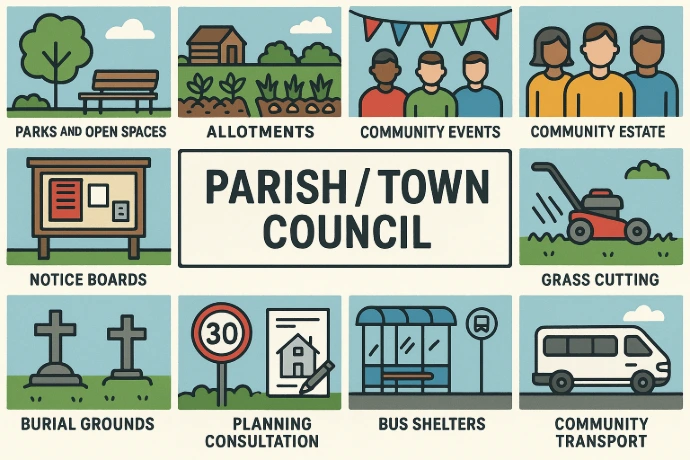
What do parish and town councils do?
Parish and town councils are the level of local government closest to you. They look after things like play areas, playing fields, allotments, village halls, cemeteries, benches and bus shelters. They comment on planning applications, give grants to local groups, run community events, and speak up for their area to the District/Borough Council, Lincolnshire County Council, the police and others.
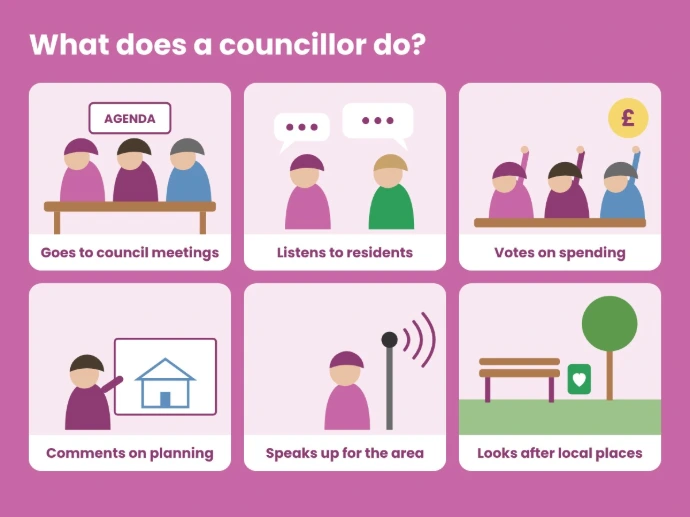
What does a councillor do?
Councillors go to council meetings, usually once a month (some more frequently others just once a quarter) and decide together how the council spends local money. They listen to residents and represent the whole community. How much time it takes depends on the council: in a small parish it may be a few hours a month, while in a larger town council it can be several hours a week. Your clerk can tell you what to expect.
You'll get support from the council's clerk, and training is available through the Lincolnshire Association of Local Councils.
Can I stand?
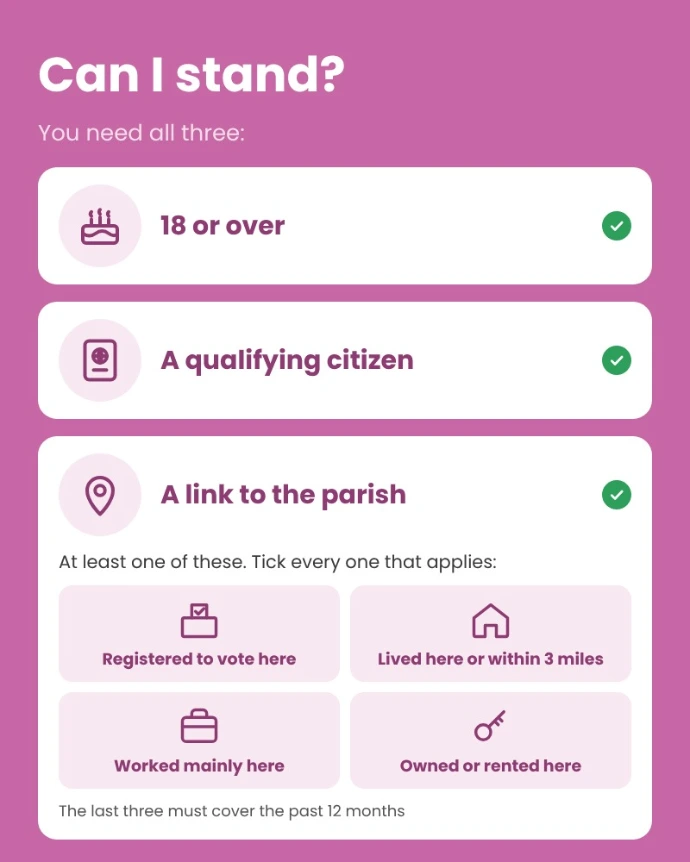
You can stand if, on the day you are nominated, you are:
• 18 or over, and
• a British, eligible Commonwealth or Irish citizen, or an eligible European Union citizen (for most, this means settled or pre-settled status held since before 31 December 2020), and
• connected to the parish in at least one of these ways (on the nomination form, tick every one that applies, not just one):
o you are registered to vote in the parish
o for the last 12 months, you have lived in the parish or within three miles of it
o for the last 12 months, your main or only place of work has been in the parish
o for the last 12 months, you have owned or rented land or property in the parish
Some people cannot stand, for example, council employees of that council and people with certain criminal convictions. The Electoral Commission's guidance for parish council candidates has the full rules.
Frequently asked questions
Here are some common questions that people have about standing as a parish or town councillor
No. You need to care about where you live and be willing to listen and take part in meetings. Your council's clerk and the Lincolnshire Association of Local Councils will help you learn the rest.
• Your parish or town clerk can tell you about the council and the seats available.
• Your District/Borough Council elections team deals with nomination papers and the election itself.
• Lincolnshire Association of Local Councils
• National Association of Local Councils: becoming a councillor
• Electoral Commission: guidance for candidates at parish council elections
• Local Government Association: becoming a councillor
• Elect Her: support for women considering standing
• Local Government Disability Champions Network
Most parish and town council meetings are open to the public to attend and observe. Please attend to see what issues are being considered.
People from all walks of life can be a councillor. You stand because you bring your perspective to the council meetings and help in its decision-making processes. A good mix of views can make decisions more representative of the community. The important thing is that you are able to make all or at least some of the council meetings to participate in the process of making decisions.
Nomination forms will be available from the Elections Team at your District/Borough Council by late March and you may need to make an appointment with them to deliver your completed nomination form by the 8th April 2027 deadline.
Key dates
|
Date |
What happens |
|
By Wednesday 31 March 2027 |
Notice of election published. Nominations open. |
|
4pm, Thursday 8 April 2027 |
Nominations close |
|
Midnight, Monday 19 April 2027 |
Last day to register to vote |
|
Thursday 6 May 2027 |
Polling day |
No. Most parish and town councils in Lincolnshire are not political. Councillors want to concentrate on the community they serve.
There may be issues that arise that may give rise to local passionate people lobbying the council to act in a certain way. Your role is to look, listen and learn about the issues and if the matter comes to the council for a vote you decide how to vote.
Unlikely. There are nearly 3000 councillor seats in Lincolnshire up for election in May 2027. Elections take place every four years for all seats on every council. More than 90% of the seats in the last few elections are filled by election without a contest.
Every council has a set number of seats to fill between five and twenty-two in Lincolnshire. If there are more candidates to fill the seats on the parish or town council this will be decided by an election and you may decide to campaign to win more votes if you wish.
If there are still any unfilled seats on the council after the election the council can co-opt people to fill those vacant seats. Contact the Clerk to ask about this after the election day.
Four years until the next election. However, you can stand down by resignation or if there is some other change in your circumstances and you vacate the seat. This is called a casual vacancy and your vacant seat will be filled either by an election or by co-option decided by the council.
No.
You can spend a limited amount on a campaign to be elected such as leaflets, flyers, mileage and the current amount is £960 plus 8p per elector and the rules are set out by the Electoral Commission and the local Returning Officer at your District / Borough Council Elections team.
No. If you are on the council as a councillor you don't need to have known anyone before becoming a councillor. You get advice from the Clerk. You can attend training about the role of the council and your role as a councillor. Please feel free to go along to observe a council meeting if you prefer to know how it works before you stand. The dates and agendas for meetings are published on the council's website and local noticeboards.
As a candidate your name is published.
If you are elected as a parish or town councillor you will be allocated a council email address (or you are asked to set one up for council business) and your name will appear as a councillor on the council website and on minutes. Your other personal information will not be disclosed unless you give permission - check with your local council. When you attend meetings you may disclose information about yourself and your connections during debates and this is your choice. You will be required to complete a document declaring your interests which is published.
It can boost your self-esteem and self-confidence and enhances pride in your local community. It can give you an inner pride in what the community can achieve when they work together. Got an idea on how to improve your community - build alliances, connections and encourage others to join you in improving the area.